

10 Best Elevated Cat Bowls for Happier Mealtimes
If your cat hunches over a flat dish, paws at the food to drag it out, or walks away after three bites, the bowl itself might be the problem. An elevated cat bowl raises food and water to a more natural height, which takes pressure off the neck and joints and can even ease whisker fatigue that makes some cats dislike deep, flat dishes. It sounds like a small change, but plenty of owners notice calmer, faster mealtimes almost right away.
So yes, raised cat food bowls genuinely help most cats, especially seniors, flat-faced breeds, and any cat prone to vomiting after eating too fast. The trick is picking the right height, material, and stability, since not every stand on the market is built with a cat's actual anatomy in mind.
We've tested and researched a range of options, from simple single-bowl stands to elevated cat water bowls with built-in tilt for easier drinking. Below you'll find our picks for the 10 best elevated bowls, covering different budgets, cat sizes, and feeding styles, so you can find one that actually fits your cat's mealtime routine.
1. Best overall elevated cat bowl
For most cats, the tilted wooden cat feeder with stainless steel bowls hits the sweet spot between function and design, and it's the one we recommend first when someone asks us where to start. It combines a raised ceramic or stainless bowl with a sturdy, non-slip stand set at a height that suits the average adult cat, so you're not guessing at measurements or stacking books under a cheap dish. Every order ships with tracking from the USA, and it's backed by Pet Shop Hero's 90-day return policy, so if your cat turns its nose up at the new setup, you're not stuck with it.
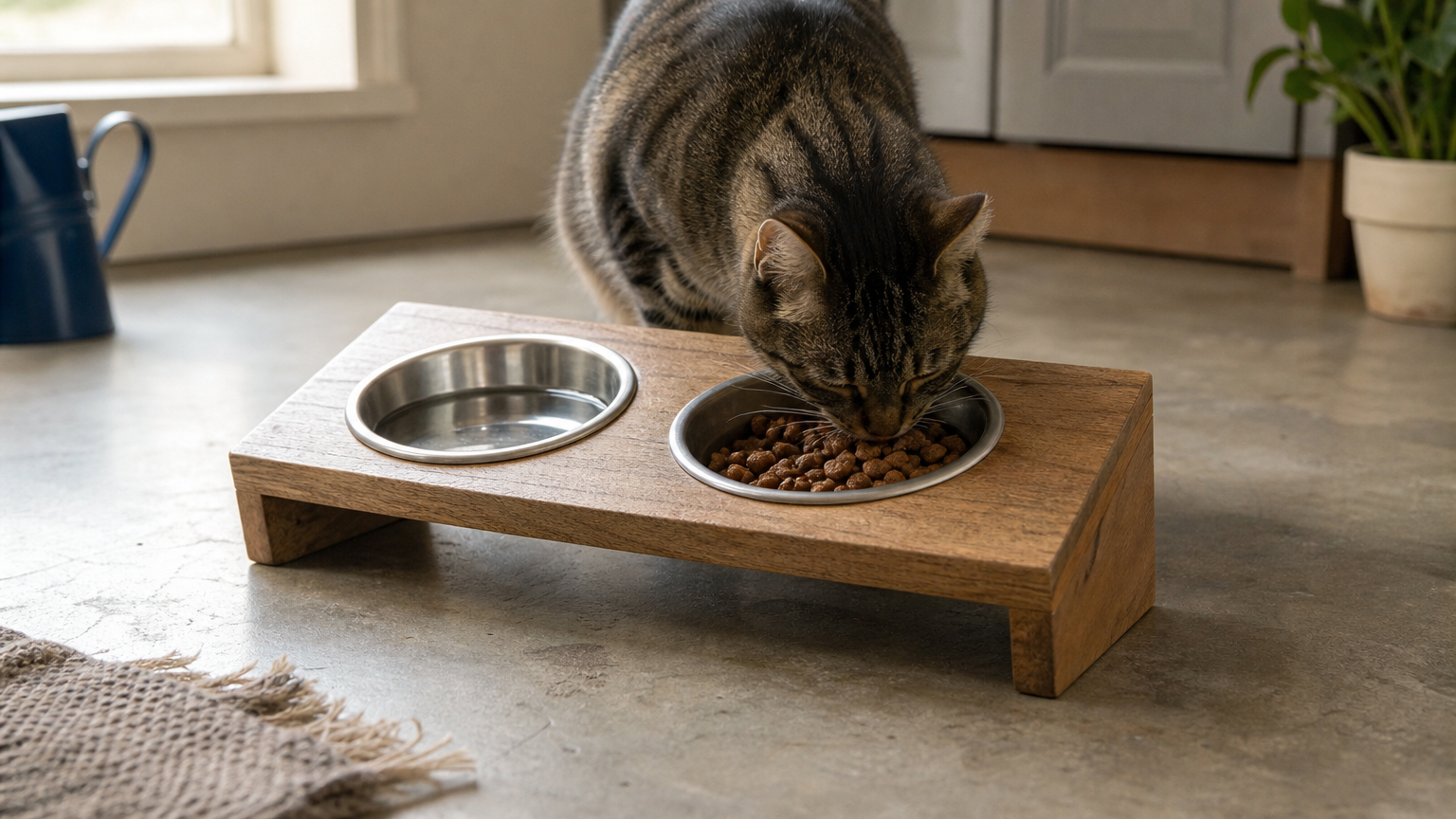
What sets this bowl apart from generic raised dishes is the attention to actual feline anatomy. The stand tilts the bowl slightly forward, which keeps food and water from pooling against the sides and forces less strain on your cat's neck as they eat. The base is weighted and rubber-gripped, so an enthusiastic eater can't send the whole thing sliding across the kitchen floor, a common complaint with lightweight plastic elevated cat bowls sold elsewhere.
A good elevated cat bowl should disappear into your cat's routine, not become another thing you have to manage.
Key features
Here's what you're getting with this pick:
- Elevated, tilted design that reduces neck strain and limits whisker contact with the bowl's sides
- Removable, dishwasher-safe bowls for easy daily cleaning
- Weighted, non-slip base that stays put even during fast, messy eaters' meals
- Multiple size options to match kittens, adult cats, and larger breeds
- Free tracked shipping to the USA, UK, and Europe
Best for
This bowl works best for owners who want one reliable option that handles most situations without a lot of trial and error. It suits single-cat households, multi-cat homes where each cat gets its own station, and anyone whose cat has shown early signs of whisker fatigue, like pawing food out of a bowl instead of eating directly from it. Senior cats and cats recovering from dental work also tend to do well with the tilted angle, since it means less bending and less pressure on a sore jaw or neck.
It's also a solid choice if you've tried a flat dish or a bargain stand before and it didn't stick. The stability and the tilt are the two features owners notice fastest, and they're usually the reason a switch from a flat bowl actually works this time.
Price range
Expect to pay in the mid-range compared to bargain bowls, though still well below premium ceramic feeding stations sold at specialty pet boutiques. You're paying for the combined stand-and-bowl design, the weighted base, and the customer support that comes with it, including live chat access if you have questions about sizing before you buy. Given the 90-day return window, it's a low-risk way to test whether an elevated setup actually changes your cat's mealtime behavior, without committing to a full feeding station overhaul if it turns out your cat needs something different.
2. Best budget-friendly elevated cat bowl
Budget-friendly doesn't have to mean flimsy, but it does mean you should expect fewer bells and whistles. This category covers the simple, single-piece plastic or bamboo stands you'll find holding a plain ceramic or plastic bowl at a modest incline. They won't have a weighted base or a tilt mechanism built into the bowl itself, but they solve the core problem: getting your cat's dish off the floor and closer to a comfortable eating height. For anyone testing whether an elevated cat bowl even makes a difference before spending more, this is where to start.
Manufacturers keep costs down by using lightweight materials and a fixed, non-adjustable height, so you're not paying for extras like interchangeable bowl inserts or anti-slip rubber feet on every model. That's fine for a calm eater on a stable floor, but it's worth checking reviews for wobble complaints before you buy, since a light stand can shift under a cat that paws at its food.
The cheapest elevated bowl that actually stays put beats an expensive one that tips over during dinner.
Key features
- Simple, fixed-height stand made from lightweight plastic, bamboo, or basic metal
- Standard round or oval bowl insert, usually not tilted
- Compact footprint that fits in tight kitchen corners
- Easy assembly, often no tools required
Best for
Owners on a tight budget, first-time buyers unsure if their cat will even tolerate a raised bowl, and households with calm, slow eaters who won't push the stand around. It's also a reasonable pick for a spare bowl in a second room, since you're not out much money if it goes unused.
Price range
Expect these cat elevated bowls to sit at the low end of the market, often less than half the cost of a stand-and-bowl combo with tilt and weighting built in. It's a fair trade-off if all you need is basic elevation, but plan to upgrade if your cat turns out to need more stability or a steeper angle.
3. Best elevated bowl for whisker-fatigue relief
Whisker fatigue is real, and it's often the actual reason a cat refuses to finish a meal even though the food is fine, which is a big part of why raised feeders help in the first place. Cats have highly sensitive whiskers packed with nerve endings, and repeated contact with the sides of a deep, narrow bowl overstimulates them until eating starts to feel unpleasant. This pick uses a wide, shallow bowl mounted on an elevated stand, so your cat's whiskers never brush the rim while they eat, and the raised height keeps their neck relaxed at the same time. If your cat has been pawing food onto the floor before eating it, or only eats from the very center of the dish, this design solves both problems at once.
If your cat drags food out of the bowl before eating it, whisker fatigue, not pickiness, is usually the culprit.
Material matters here too. Most bowls in this category are ceramic or stainless steel rather than plastic, since plastic can hold odors that bother a cat's sensitive nose almost as much as a cramped bowl bothers their whiskers.
Key features
- Wide, shallow bowl profile that keeps whiskers clear of the sides
- Elevated stand set at a comfortable neck angle for adult cats
- Ceramic or stainless steel construction to avoid odor buildup
- Non-slip base to keep the shallow bowl from sliding during eating
Best for
Cats showing classic whisker-fatigue signs are the obvious fit here: pawing food out before eating, only eating from the middle of the dish, or seeming stressed near mealtime despite being clearly hungry. It also suits flat-faced breeds like Persians, whose whiskers and facial structure make deep bowls especially uncomfortable.
Price range
Budget mid-range for this style, since the wide ceramic or steel bowl usually costs a bit more to produce than a standard round dish, even before you factor in the stand. It's still far cheaper than a full veterinary consult over a cat that seems to be avoiding food, and it directly addresses one of the more overlooked reasons a cat stops eating comfortably from an ordinary bowl.
4. Best stainless steel elevated cat bowl
Stainless steel wins out over ceramic and plastic for owners who care most about hygiene and durability, and it's worth knowing which bowl material is better before you commit. This elevated cat food bowl style pairs a raised metal stand with a heavy-gauge steel bowl that won't chip, crack, or absorb bacteria the way porous ceramic can over time. Steel also doesn't hold onto smells the way plastic does, which matters if your cat is picky about food odors lingering from yesterday's meal. Households that run their bowls through the dishwasher daily tend to gravitate here, since steel handles heat and repeated washing without degrading.
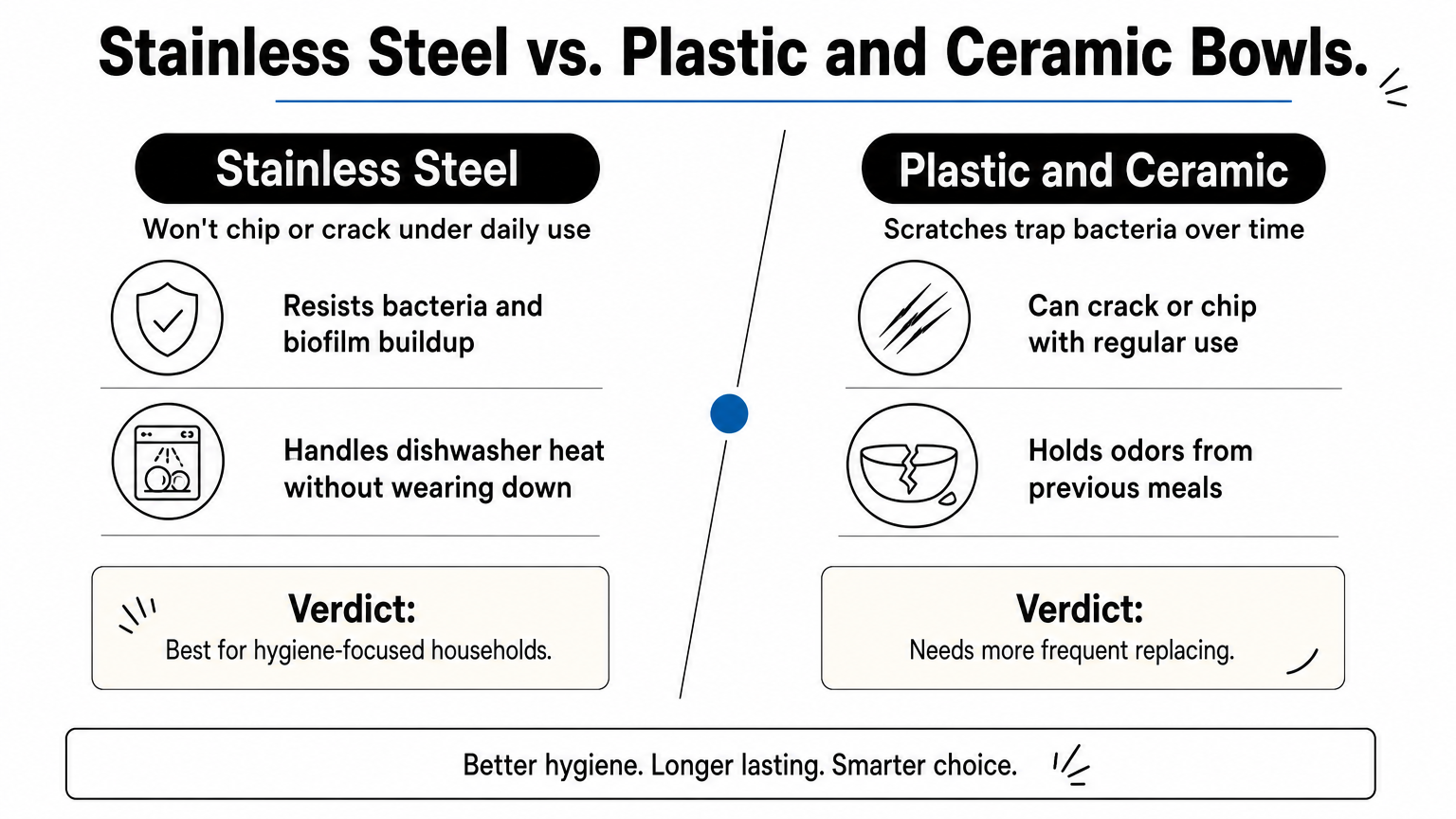
Durability is the other selling point. A steel bowl won't scratch the way plastic does, and scratches in plastic are exactly where bacteria like to hide, even after a thorough wash. If you've gone through a few cracked ceramic dishes or a plastic bowl that started smelling no matter how often you cleaned it, steel solves both problems at once.
Steel doesn't hold smells, scratches, or bacteria the way plastic and ceramic can, which is why it's the pick for hygiene-focused households.
Key features
- Heavy-gauge stainless steel bowl resistant to chipping, cracking, and scratching
- Rust-resistant coating on the stand to handle daily water exposure
- Dishwasher-safe bowl and, in most models, a wipeable stand
- Odor-resistant surface that stays neutral even with strong-smelling wet food
Best for
This pick suits owners who wash bowls daily and want a material that won't degrade under that routine, plus anyone whose cat has sensitivities to plastic, a surprisingly common issue that shows up as chin acne or food refusal. It also works well in multi-pet households where bowls get knocked around more, since steel shrugs off dents and drops that would crack a ceramic dish.
Price range
Expect to pay slightly more than a basic plastic stand but roughly in line with a quality ceramic setup, since the metal itself costs more to manufacture than molded plastic. Given how long a steel bowl lasts compared to plastic, which tends to need replacing every year or so once it scratches, the higher upfront cost usually evens out over time.
5. Best elevated cat bowl stand
Sometimes you don't need a new bowl at all, you just need a stand that holds the ones you already own. This elevated cat bowl stand category is built for owners who already have a favorite ceramic dish or a specific bowl their cat won't eat from anything else, and just want to raise it off the floor. Most stands in this style come with adjustable cutout rings so you can fit bowls of different diameters, which beats a fixed one-bowl setup if you ever swap dishes for cleaning or replace a cracked one down the road.
Wood and bamboo stands dominate this space because they hold weight well without adding bulk, and they blend into a kitchen better than a plastic frame. Look for a stand with rubber feet on the bottom and rubber-lined cutouts, since a bare wood ring against a ceramic bowl will slide and rattle every time your cat leans in to eat.
A stand that fits your cat's current bowls is often the simplest fix, no new dish required.
Key features
- Adjustable cutout rings that fit multiple standard bowl sizes
- Solid wood or bamboo build for weight and stability
- Rubber-lined openings to stop bowls from sliding or clinking
- Open design that works with bowls you already own, ceramic, steel, or plastic
Best for
This pick suits owners who've already found a bowl their cat likes and just want the height fixed, plus anyone who rotates bowls seasonally or replaces them often and doesn't want to buy a whole new elevated set each time. It's also a smart choice for multi-cat homes where each cat has a different bowl preference, since one stand design can serve every station if you buy a few.
Price range
These stands land in the low-to-mid range, since you're paying for the frame alone rather than a bowl-and-stand combo. Wood and bamboo versions run a bit higher than basic plastic frames, but they last longer and handle daily wiping down without warping, which makes the difference worth it if this stand is going to sit in a busy kitchen for years.
6. Best tilted elevated cat bowl
A tilted design goes a step further than simple elevation by angling the bowl itself, not just the stand, so the last few bites don't pool uselessly at the bottom. This elevated tilted cat bowl style typically sits at a 15 to 20 degree angle, which keeps food sliding toward your cat as they eat instead of scattering to the sides where a paw or nose has to chase it. Cats with arthritis or older cats who struggle to lower their heads all the way into a deep dish benefit the most, since the tilt does part of the work their neck and shoulders used to have to do.
Built-in tilt, like the 15 degree tilted wood feeder design, beats a wedge or books under a flat bowl because the angle is fixed and consistent every time you set the bowl down. Cheap workarounds shift over weeks of daily use, and a bowl that gradually flattens out defeats the purpose of buying one in the first place.
A properly tilted bowl does part of the bending for your cat, so their neck doesn't have to do all the work.
Key features
- Fixed 15 to 20 degree tilt built into the bowl, not the stand
- Deep-enough basin to hold wet or dry food without spilling at the angle
- Non-slip base that keeps the tilted bowl from creeping forward during eating
- Dishwasher-safe materials, usually ceramic or BPA-free plastic
Best for
Senior cats, cats with arthritis or spinal issues, and any cat that's been diagnosed with megaesophagus or reflux, where a steeper angle can genuinely ease digestion. It also suits cats recovering from surgery who need to eat without straining their neck or back, since the tilt reduces how far they have to reach down and forward for each bite.
Price range
This style runs slightly above a basic flat elevated bowl, since manufacturing a properly tilted basin takes more design work than a flat insert on an angled stand. It's still reasonably priced compared to specialty veterinary feeding equipment, and for a cat with a real mobility or digestive issue, the cost difference is easy to justify.
7. Best elevated cat water bowl
Water matters just as much as food, and an elevated cat water bowl solves a problem separate from mealtime posture: cats naturally prefer moving or elevated water sources, a trait left over from their wild ancestors who avoided drinking near ground-level predators. This category usually pairs a raised bowl with a wider basin than you'd see on a food dish, since cats drink better from a broader surface that doesn't crowd their whiskers against the sides. Some models add a slight tilt too, which keeps water pooled toward the front rather than sloshing out with every lap.
Hydration is a real concern for cats, especially ones eating mostly dry kibble, and a bowl your cat actually wants to use beats one that just sits full and untouched, which is also why some owners turn to water fountains that encourage cats to drink. Owners who switch to elevated cat water bowls often report their cat drinking more consistently throughout the day, not just when it's thirsty enough to tolerate an uncomfortable setup.
A water bowl your cat avoids does nothing for hydration, no matter how full you keep it.
Key features
- Wide, shallow basin that keeps whiskers clear during drinking
- Elevated stand set at a comfortable neck height, separate from any food station
- Non-slip base to handle repeated lapping without sliding
- Ceramic or stainless steel material, both of which resist the biofilm buildup that plastic bowls develop within days
Best for
This pick suits cats that seem uninterested in a standard water bowl, cats prone to urinary issues who need encouragement to drink more, and any household already using a separate elevated food station that wants to match it with proper water placement a few feet away. It's also useful for older cats, since dehydration risk climbs with age and a bowl that's easy to use gets used more often.
Price range
Expect pricing similar to a standard elevated food bowl, sometimes slightly less since water bowls skip the tilt mechanisms found on premium food designs. Ceramic and steel versions cost more than plastic, but given how much bacteria plastic can trap in standing water, the extra cost is worth it for a bowl your cat will actually drink from daily.
8. Best elevated bowl set for multiple cats
Multi-cat households run into a problem single-bowl stands don't solve: cats guarding food, eating too fast to beat a housemate to the dish, or simply refusing to share a station. This raised three-bowl feeding station style groups two, three, or four raised bowls into one connected stand, spacing them enough that cats can eat side by side without crowding each other's whiskers or feeling like they need to compete. It keeps feeding time calmer and makes cleanup simpler too, since you're wiping down one unit instead of chasing separate dishes scattered around the kitchen.
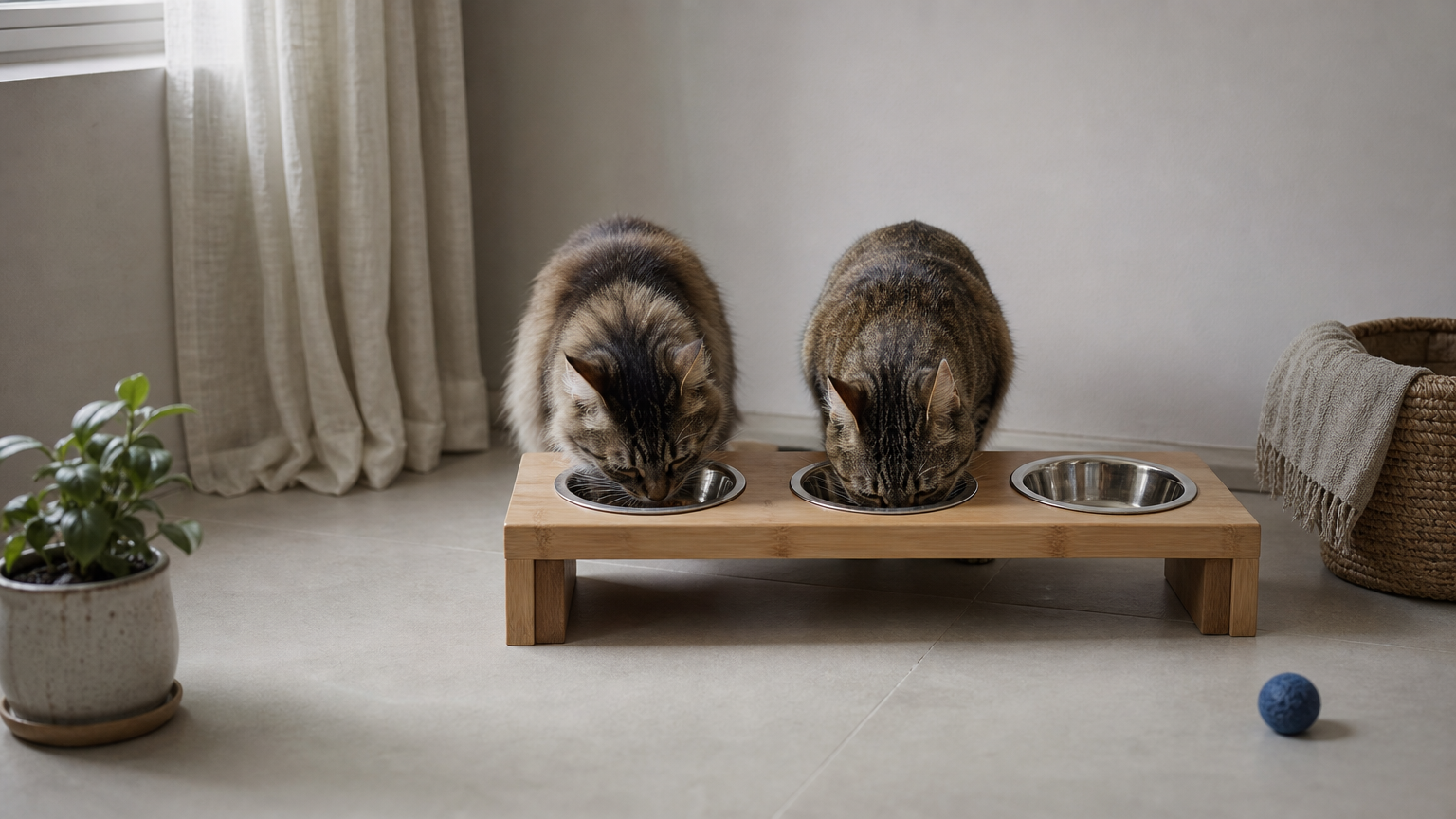
Spacing is the detail that makes or breaks these sets. A stand with bowls jammed too close together defeats the purpose, since a nervous eater will still hover near the food instead of settling in. Look for a design with at least a few inches between each bowl, and ideally a slightly raised divider or lip that gives each cat a visual boundary during meals.
Cats that fight over food usually calm down once each one gets its own clearly separated bowl.
Key features
- Multiple raised bowls, usually two to four, mounted on one connected base
- Wide spacing between bowls to reduce competition and guarding behavior
- Removable inserts so each bowl can be washed separately
- Compact overall footprint despite holding several bowls at once
Best for
Homes with two or more cats, especially if one cat eats faster than the others or tends to finish its own bowl before nosing into a housemate's dish. It also suits owners who feed both wet and dry food at the same time, since a set lets you dedicate separate bowls to each without setting up two full stands. Foster homes and multi-pet households juggling different diets get extra value here, since the set keeps every cat's portion visually and physically separate.
Price range
Expect to pay more upfront than a single-bowl stand, simply because you're getting several elevated dishes in one unit rather than one. Still, it usually costs less than buying that many individual elevated cat bowls separately, and the connected base means less counter or floor clutter than running multiple standalone stands side by side.
9. Best elevated bowl for kittens and small cats
Kittens and petite breeds like Singapuras or Devon Rex cats need a shorter setup than the standard adult-height stands covered so far. This elevated cat food bowl style sits just an inch or two off the ground, low enough that a kitten still learning to eat solid food doesn't have to stretch or hop up to reach the rim. Go too tall too soon and you'll watch a kitten avoid the bowl entirely, which defeats the whole point of switching away from a flat dish in the first place. The goal here isn't skipping elevation, it's matching the height to a smaller body that hasn't grown into an adult-sized setup yet.
Lighter cats also mean lighter paw pressure, so stability works differently at this size than it does with a hefty adult cat leaning on the stand. Even a small tap from a curious kitten can send an ungrounded stand skidding, so a wide, low base matters more here than sheer weight.
A stand built for adult cats can be genuinely too tall for a kitten, so match the height to the cat you actually have.
Key features
- Low-profile stand, typically 1 to 2 inches high, sized for kittens and small adult breeds
- Small-diameter bowl that doesn't dwarf a kitten's face during meals
- Wide, flat base for stability against light paw pressure
- Rounded edges throughout, since kittens explore stands with their mouths as much as their paws
Best for
This pick suits kittens transitioning off nursing or wet mush onto solid food, and adult small breeds whose proportions never really call for a tall stand, so it pairs well with the other kitten basics like safe first toys for a kitten. It also works well as a starter setup you replace once a kitten grows into a full-sized adult, since the low height keeps things safe during those clumsy first weeks of solo eating.
Price range
Expect this size to sit at the lower end of the market, since less material goes into a shorter stand and a smaller bowl. It's a reasonable expense given how briefly some owners use it before upgrading, though many small-breed owners keep the same low stand for years without ever needing to size up.
10. Best elevated bowl for large or senior cats
Big cats and older cats need the opposite adjustment from the kitten setup above: more height, a wider bowl, and a base sturdy enough to handle real weight leaning on it. This elevated cat food bowl style typically sits 4 to 6 inches off the ground, tall enough for a Maine Coon or a senior cat with arthritis to eat without crouching down toward the floor. Large breeds carry more weight through their joints with every step, and a bowl set too low forces the same neck strain you're trying to avoid by going elevated in the first place. Senior cats dealing with hip or spine stiffness benefit even more, since a taller stand means less bending at exactly the joints that already hurt.
Weight capacity matters here in a way it doesn't for smaller cats. A stand rated for an average adult cat can flex or tip under a 15-pound Maine Coon leaning its full body weight against the rim, so check the manufacturer's listed capacity before buying rather than assuming any elevated stand will hold up.
A stand built for an average-sized cat can buckle under a large breed, so weight capacity matters as much as height.
Key features
- Taller stand height, usually 4 to 6 inches, matched to large-breed proportions
- Reinforced base rated for higher weight capacity than standard stands
- Wide bowl diameter that accommodates bigger faces without crowding
- Non-slip, wide footprint for stability under a heavier cat leaning in
Best for
Large breeds like Maine Coons, Ragdolls, and Norwegian Forest Cats fit naturally here, along with senior cats of any breed dealing with arthritis or reduced mobility. It also suits overweight cats working through a vet-guided weight plan, since easier, more comfortable eating posture can matter as much as portion control during that process.
Price range
Expect to pay slightly more than a standard adult-height bowl, since the reinforced base and larger bowl use more material to build. It's money well spent for a cat that's outgrown a smaller setup or one whose joints need all the help they can get at mealtime.
Choosing the right bowl for your cat
Most cats do better with an elevated cat bowl than a flat dish on the floor, but the right pick depends on your cat's size, age, and any quirks you've noticed at mealtime. A kitten needs a low-profile stand, a Maine Coon needs a reinforced base, and a cat pawing food out of its dish probably needs a wide, shallow bowl for whisker relief before anything else. Start with the problem you're actually seeing, not the fanciest option on the shelf.
Don't overthink the first purchase. Elevated feeding is easy to test and easy to reverse if it doesn't suit your cat, especially with a generous return window backing you up. Ready to fix your cat's mealtime setup? Browse the full range of elevated and tilted cat bowls at Pet Shop Hero and find the height, tilt, and material that finally gets your cat eating comfortably again.